Neuroscience is Interdisciplinary – But What Does That Really Mean?
Author: Nadine Barone
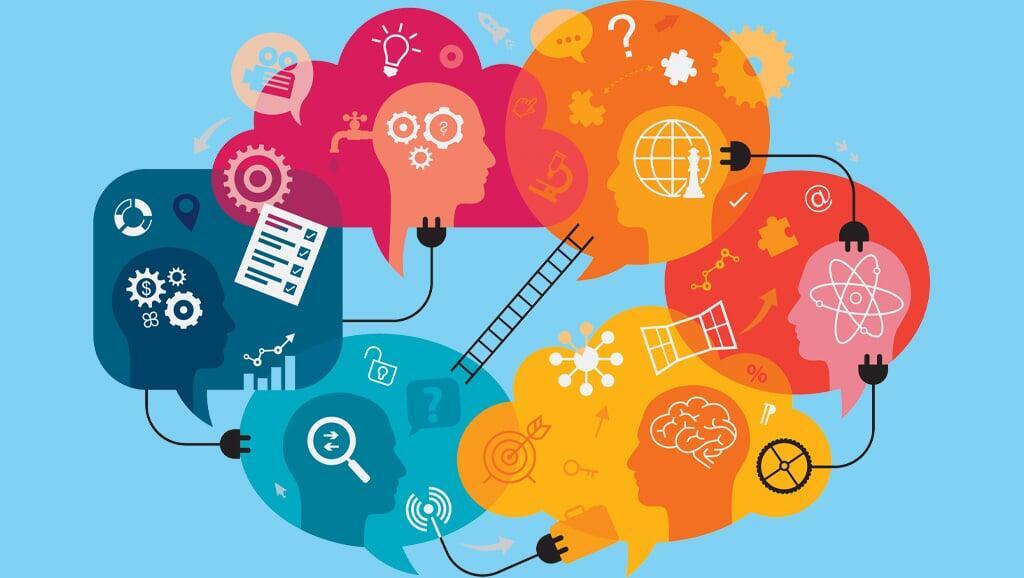
If you’ve been involved in neuroscience research for even a few months, you’ve probably heard: “Neuroscience is interdisciplinary” countless times. It’s a phrase that pops up on program websites, in research papers, and during faculty talks. But what does it really mean? And how does it affect us as graduate students navigating the field?
At its simplest, “interdisciplinary” means relating to more than one branch of knowledge. Neuroscience exemplifies this: it blends biology, chemistry, physics, psychology, engineering, medicine, and more. For example, physics helps us understand different imaging techniques, anatomy guides cellular mapping, and psychology provides the behavioural frameworks we use to interpret neural activity. But interdisciplinary isn’t just about borrowing tools, it’s also about contributing back. Insights from neuroscience inform fields like education, artificial intelligence, engineering, and medicine creating a two-way exchange of knowledge.
Neuroscience and Education
Take education, for example. Research on learning, memory consolidation, and sleep helps shape approaches to teaching and curriculum design. By understanding how the brain encodes and retains information, educators can optimize classroom activities, learning environments, and study schedules. For graduate students, this is a tangible reminder that our work can extend beyond the lab and influence society in meaningful ways. For more on neuroeducation, see Walden University's overview or this article from KnowledgeOne.
Neuroscience and Artificial Intelligence
Neuroscience also informs AI. Understanding how neurons process information, encode signals, and adapt through plasticity has inspired neural network architectures and machine learning models. While modern AI systems are not exact replicas of the brain, concepts such as layered processing and reinforcement learning have roots in neural computation, for example, dopamine systems informing reinforcement learning strategies. Observing these connections highlights how fundamental research in neuroscience can spark innovation in rapidly evolving fields. For a deeper dive, see this review in Neuron.
Neuroscience and Engineering
Engineering provides another clear example. Brain-computer interfaces, prosthetic control, and neurofeedback devices all rely on detailed knowledge of neural activity. By understanding how the brain communicates and generates signals, engineers can design technologies that interface seamlessly with it. Neuroscience informs the design of these devices, guiding electrode placement, signal decoding, and therapeutic targets, while engineers turn those insights into tools that can improve patient outcomes. See this article from IEEE Pulse for more on this intersection of neuroscience and engineering.
Neuroscience and Medicine
Medicine and clinical practice provide another clear example of interdisciplinarity. Neuroscience research informs treatments for neurological and psychiatric conditions, spanning molecular mechanisms to somatic and psychotherapeutic interventions. Translational neuroscience converts basic discoveries into clinical applications, from improved neuroimaging that enables earlier and more precise diagnosis, to biomarkers that help identify therapeutic targets. For example, insights from basal ganglia circuitry have guided the development of deep brain stimulation for Parkinson’s disease, helping restore motor function. At the same time, principles from neuroplasticity and circuit research are shaping rehabilitation approaches for stroke and neurodevelopmental disorders, illustrating the broader impact of neuroscience in patient care. For more information, see papers on deep brain stimulation in Parkinson's and neurorehabilitation approaches.
Why This Matters for Graduate Students
The interdisciplinary nature of neuroscience is part of what makes it so exciting. As graduate students, it allows us to investigate questions that draw from multiple fields, rather than being limited to a single approach. We can use perspectives and techniques from diverse areas and learning how other disciplines operate can provide novel insights into our own research that we might not have seen otherwise. Interdisciplinarity challenges us to communicate across academic languages, collaborate with people from diverse academic backgrounds, and develop creative solutions that can be meaningful to not only our field but others as well. Neuroscience exists at the intersection of many domains, and learning to navigate this intellectual ecosystem is one of the most valuable skills we can develop.References
Bonanno, M., & Calabrò, R. S. (2023). Bridging the gap between basic research and clinical practice: the growing role of translational neurorehabilitation. Medicines, 10(8), 45. https://doi.org/10.3390/medicines10080045
Eisinger, R. S., Cernera, S., Gittis, A., Gunduz, A., & Okun, M. S. (2019). A review of basal ganglia circuits and physiology: application to deep brain stimulation. Parkinsonism & related disorders, 59, 9–20. https://doi.org/10.1016/j.parkreldis.2019.01.009
Hassabis, D., Kumaran, D., Summerfield, C., & Botvinick, M. (2017). Neuroscience-inspired artificial intelligence. Neuron, 95(2), 245–258. https://doi.org/10.1016/j.neuron.2017.06.011
He, B. (2024, August 2). Neuroengineering-engineering the nervous system. IEEE Pulse. https://www.embs.org/pulse/articles/neuroengineering-engineering-the-nervous-system/
Meilleur, C. (2024, July 3). Using neuroscience to advance education. KnowledgeOne. https://knowledgeone.ca/using-neuroscience-to-advance-education/
Walden University. (n.d.). What is neuroeducation? Walden University. https://www.waldenu.edu/news-and-events/what-is-neuroeducation